


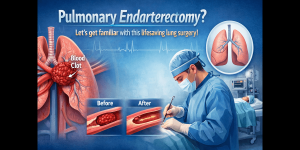
The concept of Pulmonary Endarterectomy PEA or PTE may seem complex, and though it is complex, it is a curative, open-heart surgery that helps in the removal of organized chronic blood clots as well as scar tissues from the pulmonary arteries in order to treat Chronic Thromboembolic Pulmonary Hypertension – CTEPH.
This surgery is the gold standard, which requires stopping your heart and using a bypass machine in order to restore blood flow to your lungs. This lifesaving surgery can improve lung function, thereby reducing right heart strain. Thus, it is better to consult the best heart specialist in Patna.
The procedure of the surgery
- Approach – Patient is placed on a heart-lung bypass machine, where a median sternotomy incision through the breastbone is performed.
- Hypothermic Circulatory Arrest – The body of the patient is cooled to deep temperatures for the purpose of protecting the organs. The surgeon will then stop the bypass machine for short periods in order to drain the blood, thereby allowing a clear and bloodless view of your artery for the removal of any kind of obstructions.
- Dissection – The surgeons dissect and peel away the clot material, which is obstructing and fibrous, from the intima – inner lining of the branches of the pulmonary artery, meticulously.
- Duration – The surgical procedure is then repeated on both your lungs, generally taking several hours.
Goals of the surgery
Reduction in Pulmonary Vascular Resistance – PVR – In order to diminish the high pulmonary artery pressure.
Improvisation of Right Ventricular Function – Through removal of obstructions, the right side of your heart is no longer required to force blood through the arteries that are blocked, thereby preventing or reversing heart failure.
Enhancement of gas exchange – For the purpose of alleviating symptoms such as chest pain, fatigue, shortness of breath, and increasing the ability for physical activity.
Long-term Cure – It is the primary and potentially curative treatment for CTEPH patients that offers superior long-term survival results in comparison to medication alone.
The Process of Recovery
1. Hospital Stay: Patients often spend 1 to 2 weeks in the hospital, which also includes the time taken in the intensive care unit (ICU).
2. Initial Recovery: The initial few weeks involve strict monitoring, gradual movement, and breathing exercises.
3. Long-term Recovery: Complete recovery takes several months, in general.
4. Rehabilitation: Cardiac rehabilitation is usually recommended for the improvement of strength and breathing capacity as well.
Core Candidate Criteria
Not every CTEPH patient is a candidate for this surgery.
- Condition – Confirmed CTEPH, generally with symptoms of breathlessness that persist for more than 6 months despite appropriate anticoagulation.
- Location of the Disease – Thromboembolic obstruction is considered optimal if it is in the main, lobar, or even segmental pulmonary arteries. Specialized surgeons usually operate on more distal diseases.
- Hemodynamics – Elevated Pulmonary Vascular Resistance – PVR that is known to correlate with the extent of the obstruction.
- Right Ventricular Dysfunction – Patients who have right heart strain or failure usually see the most significant advantage from the surgery.
- Physical Function – Candidates ought to be stable enough in order to undergo complex deep hypothermic circulatory arrest.
Conclusion:-
Postoperative care for Pulmonary Endarterectomy encompasses intensive care in combination with monitoring for 1 to 2 days, centering on the management of potential reperfusion lung injury as well as right heart failure, with typical hospital stays that last for about a week to 2 weeks. This surgery can prove to be lifesaving. You must visit the best Angioplasty doctor in Patna to get more precise details on the surgery and whether you need it.