Why Is Early Consultation with the Best Cardiologist in Patna Crucial?

Early consultation with a specialist can mean the difference between managing a mild cardiac issue and coping with an unexpected medical crisis. Cardiovascular conditions often develop quietly over time without obvious symptoms. By seeking timely medical advice, families can identify hidden risks early, prevent irreversible heart tissue damage, and maintain a high quality of life through guided, long-term care.

If you or a family member notice subtle indicators like breathlessness, high blood pressure, or unexplained exhaustion, booking an evaluation with the Best Cardiologist in Patna ensures access to accurate diagnostic tools and personalized treatment strategies before complications arise.

Why Early Consultation with the Best Cardiologist in Patna Matters

Early clinical evaluation shifts heart care from emergency response to active prevention. Waiting until severe symptoms occur often limits treatment choices and lengthens recovery time.

Key advantages of proactive cardiac evaluations include:

  • Preventing Irreversible Damage: Catching coronary blockages early minimizes the risk of heart muscle injury or sudden heart attacks.

  • Accurate Disease Tracking: Conditions such as hypertension, elevated cholesterol, and heart valve disorders can be controlled before they strain the cardiovascular system.

  • Customized Preventive Plans: Individualized guidance on physical activity, stress management, and nutrition helps maintain long-term heart strength.

At Dr.Namanheart (namanheart.com), patient care focuses on identifying cardiovascular risks early through comprehensive diagnostic evaluations and expert clinical guidance.

Advanced Diagnostic Technologies in Early Screening

Accurate early intervention relies heavily on precise imaging and diagnostic technology. Evaluating heart structure, blood flow, and electrical activity allows doctors to detect subtle abnormalities long before noticeable physical symptoms appear.

The Role of Non-Invasive Echo Assessments

Echocardiography serves as one of the most reliable, non-invasive diagnostic tools in modern cardiology. A detailed 2D or 3D ultrasound image allows doctors to examine heart valve performance, measure pumping efficiency, and inspect chamber dimensions.

Consulting a trusted Best ECHO Doctor in Patna ensures that structural issues, valve leakages, and congenital heart variations are accurately identified and monitored over time.

Comprehensive Diagnostic Services

  • 2D & 3D Echocardiography: Evaluates heart muscle pumping function and structural integrity.

  • Treadmill Stress Testing (TMT): Monitors cardiac performance under exertion to detect hidden blockages.

  • Holter & ABPM Monitoring: Tracks cardiac rhythms and blood pressure variations over 24-hour periods.

  • Advanced Angiography: Provides detailed mapping of coronary arteries when non-invasive tests indicate potential blockages.

Priority Checklist for Family Heart Safety

Early Symptom / Indicator Primary Diagnostic Test Clinical Focus
Mild Chest Tightness & Exertional Fatigue TMT / Stress Testing Coronary Artery Evaluation
Shortness of Breath & Leg Swelling 2D Echo Screening Heart Valve & Pumping Assessment
Fluttering Heartbeats or Dizziness ECG & Holter Monitoring Arrhythmia & Electrical Rhythms

Frequently Asked Questions (FAQs)

1. When should someone schedule a preventive heart checkup?

Adults over 30 especially those with a family history of heart disease, diabetes, high blood pressure, or high cholesterol should undergo annual cardiac screenings including blood pressure checks, lipid panels, and an ECG.

2. Is an Echo test painful or harmful?

No. An Echocardiogram (Echo) is a completely non-invasive, painless ultrasound test that uses sound waves to create live images of the heart without radiation exposure.

3. Where can I find expert cardiac screening and Echo services in Patna?

You can book a diagnostic consultation directly through Dr.Namanheart at namanheart.com for comprehensive cardiac care, advanced echocardiography, and non-invasive diagnostic testing in Patna.


What to Ask Your Patna Cardiologist at Your First Visit

Visit a heart specialist for the first time can feel overwhelming. Whether you are dealing with persistent high blood pressure, irregular heartbeats, or chest discomfort, taking proactive control of your cardiac care begins with asking the right questions.

To help you get the most out of your consultation, here is a structured guide on essential questions to discuss with the Best Heart Specialist in Patna, along with what to expect during your first visit.

Visiting a Best Heart Specialist in Patna: Essential Questions for Your First Consultation

During your initial consultation with Dr. Abhishek, sitting down for a thorough conversation helps establish a personalized medical strategy. Here are the core areas to cover:

1. Questions About Diagnosis and Risk Factors

  • What is the underlying cause of my symptoms?
    Ask whether your issues stem from arterial blockages, electrical rhythm disturbances, or lifestyle factors.

  • What are my specific cardiovascular risk factors?
    Understand how family history, blood pressure, lipid levels, or lifestyle contribute to your condition.

2. Questions About Diagnostic Tests

  • Which non-invasive tests do I need right away?
    Ask about initial evaluations like 2D Echocardiography, TMT (Treadmill Test), or Holter monitoring.

  • How do these tests help guide my treatment plan?
    Clarify how diagnostic results will influence medication or intervention strategies.

3. Questions About Treatment and Lifestyle Changes

  • What are my treatment options—medication vs. procedure?
    Discuss whether your condition can be managed conservatively with prescription drugs or if an interventional procedure like an angioplasty is required.

  • What immediate lifestyle changes should I make?
    Get specific recommendations regarding diet, sodium intake, daily exercise limits, and stress management.

Why Expert Care Under Dr. Abhishek Matters

Selecting an experienced cardiologist ensures that subtle cardiac warning signs are evaluated with total precision. Dr. Abhishek focuses on a comprehensive diagnostic approach, combining non-invasive testing with state-of-the-art interventional capabilities to deliver tailored patient care. From routine heart health screenings to complex interventional procedures, having a dedicated specialist guides you safely toward long-term recovery.

Conclusion

Preparing for your first cardiology appointment removes the anxiety of the unknown and turns your consultation into an empowering conversation. By asking targeted questions about your diagnosis, test options, and treatment path, you take an active role in protecting your heart health. If you are experiencing cardiac symptoms or need an expert evaluation, scheduling a visit with Dr. Abhishek in Patna ensures your heart receives the advanced, compassionate care it deserves.

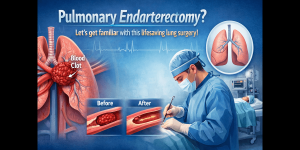
Pulmonary Endarterectomy? Let’s get familiar with this lifesaving lung surgery!

The concept of Pulmonary Endarterectomy PEA or PTE may seem complex, and though it is complex, it is a curative, open-heart surgery that helps in the removal of organized chronic blood clots as well as scar tissues from the pulmonary arteries in order to treat Chronic Thromboembolic Pulmonary Hypertension – CTEPH. 

This surgery is the gold standard, which requires stopping your heart and using a bypass machine in order to restore blood flow to your lungs. This lifesaving surgery can improve lung function, thereby reducing right heart strain. Thus, it is better to consult the best heart specialist in Patna.

The procedure of the surgery

  • Approach – Patient is placed on a heart-lung bypass machine, where a median sternotomy incision through the breastbone is performed.  
  • Hypothermic Circulatory Arrest – The body of the patient is cooled to deep temperatures for the purpose of protecting the organs. The surgeon will then stop the bypass machine for short periods in order to drain the blood, thereby allowing a clear and bloodless view of your artery for the removal of any kind of obstructions.  
  • Dissection – The surgeons dissect and peel away the clot material, which is obstructing and fibrous, from the intima – inner lining of the branches of the pulmonary artery, meticulously.  
  • Duration – The surgical procedure is then repeated on both your lungs, generally taking several hours.

Goals of the surgery

Reduction in Pulmonary Vascular Resistance – PVR – In order to diminish the high pulmonary artery pressure.  

Improvisation of Right Ventricular Function – Through removal of obstructions, the right side of your heart is no longer required to force blood through the arteries that are blocked, thereby preventing or reversing heart failure.  

Enhancement of gas exchange – For the purpose of alleviating symptoms such as chest pain, fatigue, shortness of breath, and increasing the ability for physical activity.  

Long-term Cure – It is the primary and potentially curative treatment for CTEPH patients that offers superior long-term survival results in comparison to medication alone. 

Pulmonary

The Process of Recovery 

1. Hospital Stay: Patients often spend 1 to 2 weeks in the hospital, which also includes the time taken in the intensive care unit (ICU).

 2. Initial Recovery: The initial few weeks involve strict monitoring, gradual movement, and breathing exercises.

3. Long-term Recovery: Complete recovery takes several months, in general.

4. Rehabilitation: Cardiac rehabilitation is usually recommended for the improvement of strength and breathing capacity as well.  

Core Candidate Criteria

Not every CTEPH patient is a candidate for this surgery. 

  • Condition – Confirmed CTEPH, generally with symptoms of breathlessness that persist for more than 6 months despite appropriate anticoagulation. 
  • Location of the Disease – Thromboembolic obstruction is considered optimal if it is in the main, lobar, or even segmental pulmonary arteries. Specialized surgeons usually operate on more distal diseases. 
  • Hemodynamics – Elevated Pulmonary Vascular Resistance – PVR that is known to correlate with the extent of the obstruction. 
  • Right Ventricular Dysfunction – Patients who have right heart strain or failure usually see the most significant advantage from the surgery. 
  • Physical Function – Candidates ought to be stable enough in order to undergo complex deep hypothermic circulatory arrest.  

Conclusion:-

Postoperative care for Pulmonary Endarterectomy encompasses intensive care in combination with monitoring for 1 to 2 days, centering on the management of potential reperfusion lung injury as well as right heart failure, with typical hospital stays that last for about a week to 2 weeks. This surgery can prove to be lifesaving. You must visit the best Angioplasty doctor in Patna to get more precise details on the surgery and whether you need it. 

Why Does Chest Pain Occur Even If ECG Is Normal?

Chest pain is one of the most alarming symptoms a person can experience. Many people immediately associate it with a heart attack or serious heart disease. However, it can be confusing and even frustrating when someone experiences chest pain but their ECG (Electrocardiogram) results come back normal. This often leads to the question: why does chest pain still occur despite a normal ECG? Understanding this requires looking beyond just one test and considering multiple possible causes.

Table of Contents

1. Introduction: Chest Pain with a Normal ECG
2. Understanding ECG and Its Limitations
3. Possible Reasons for Chest Pain with a Normal ECG
4. When Should You Be Concerned?
5. Importance of Advanced Diagnosis
6. Lifestyle Factors That Contribute to Chest Pain
7. Conclusion

Understanding ECG and it’s limitations

An ECG is a test that uses electrical activity from the heart to create a picture of the heart’s electrical activity. This can help to identify problems with heart rhythms, heart attack and low blood flow to the heart. The ECG is a generally accepted test however it is not always 100% accurate.

Just because an ECG is normal does not mean that the heart is completely healthy. Some heart conditions, particularly in their early stages or in an intermittent pattern, will not show up on the ECG. As a result, patients with ongoing symptoms despite reporting a normal result should consult with the Best Cardiologist in Patna.

Possible Reasons for Chest Pain with a Normal ECG

1. Myalgia or Bone-Originated Chest Pain

Chest pain can also come from the muscles, rib bones, or joints that are situated on the chest wall itself. An example of this would be costochondritis, which is an inflammation of the cartilage, located between the ribs. Costochondritis often is associated with a sharp, stabbing type of chest discomfort that can be confused with the discomfort caused by the heart. Chest wall or costochondritis has the characteristic of being accentuated with movement or with pressure applied to the area of discomfort, and it is not related to the heart functioning.

2. Gastroesophageal Reflux Disease Causes Chest Pain

From my experience everything from heartburn to gastrointestinal reflux disease are very common causes of chest pain. Gastroesophageal Reflux Disease causes chest pain, because the acid from the stomach goes back up through the esophagus. Many times, these symptoms occur in conjunction with the symptoms described in the first card example.

The accompanying ECG in the above example is typically normal, but the patient will describe extreme discomfort. As a result, a proper diagnosis will provide a patient with the opportunity to avoid unneeded anxiety and get the correct treatment for the condition.

3. Anxiety or Panic Attacks Cause Chest Discomfort

Mental health problems can have a significant effect on physical symptoms. A patient may experience chest tightness, palpitations, and shortness of breath related to an anxiety or panic attack. The symptoms may be mistaken for those of a heart attack.

Although the ECG will be normal, a patient may still describe having extreme discomfort. By analyzing your stresses and/or by seeking assistance from a professional, a patient may reduce his/her discomfort significantly.

4. Hidden or Early Heart Problems

Neither will some heart problems manifest themselves on an ECG right away. For example, some coronary artery blockages may not exhibit any visible changes—even slight changes—on an ECG.

Advanced testing such as stress tests, echo-cardiograms or angiography may be needed to validate these hidden heart problems. The best angioplasty physician in Patna can aid in identifying these hidden problems, as well as when to require additional intervention.

5. Lung Related Abnormalities

Pneumonia, pleuritis (or lung lining inflammation), or perhaps pulmonary embolism can directly cause chest pain. None of these will be seen on an ECG since they won’t affect the electrical activity of the heart.

There are also accompanying symptoms of each of these conditions such as cough, fever, or laboredly breathing.

6. Nerve-Related Pain

Cervical spine problems may compress nerves in the neck or back, which results in pain radiating into the chest. Nerve pain may be interpreted as cardiac pain.

7. Microvascular Angina

This is another lesser known heart condition that leads to dysfunction of the small blood vessels located in the heart. Microvascular angina won’t be identified on an ECG; however, it will create significant chest pain problems and warrants a specialized evaluation and treatment.
Best Cardiologist in Patna

When Should You Be Concerned?

You shouldn’t ignore any of the following symptoms, even if your ECG shows everything to be normal:

• If you have multiple episodes of chest pain or severe episodes of chest pain
• If you’ve ever had a sensation of pain radiating from your chest to any of your arms, neck or jaw
• If your chest pain is accompanied by sweating, nausea or shortness of breath
• If you have any known risk factors for heart disease which include, among others: diabetes, high blood pressure or a family history of heart disease

If you experience any of the above-mentioned symptoms, you should seek the advice of the Best Cardiologist in Patna for a complete workup.

Importance of Advanced Diagnosis

One ECG does not represent an accurate picture of your heart’s health. MDs may recommend other cardiac diagnostic testing such as:

• Echocardiography (to examine the heart anatomy and function)
• Treadmill testing (to assess the heart’s ability to work under stress)
• CT Angiography or Coronary Angiography (to determine whether you have blockage)

The sooner your blockage is diagnosed, the sooner you will receive treatment from one of the Best Angioplasty Doctor in Patna, which could ultimately save your life.

Lifestyle Factors That Contribute to Chest Pain

Chest discomfort can also be due to lifestyle behaviors. Lifestyle behaviors that can contribute to both cardiac and non-cardiac chest pain include the following:

  • Poor Nutrition
  • Inactivity
  • Cigarette Smoking
  • High-Levels of Stress

However, adopting healthy lifestyle behaviors can significantly decrease your risk for experiencing chest pain in the future.

Conclusion:

Chest pain without an abnormal ECG will often happen more frequently than people realize and is often not just related to a heart problem, but should always be evaluated, diagnosed in a timely manner by a qualified provider, and your concerns should be properly addressed so you will have peace of mind.

Suffering from Bradycardia? Visit the Best Pacemaker Doctor in Patna

The best Pacemaker doctor in Patna is generally an electrophysiologist or a cardiologist who specializes in disorders related to the rhythm of the heart. The cardiothoracic surgeons diagnose, implant, and manage heart rhythm devices. He treats those conditions where the heart beats too fast, too slowly, or even irregularly. The primary and initial goal of the pacemaker doctor is to manage arrhythmias that are responsible for the disruption of the normal function of the heart.

Understanding Bradycardia

The condition Bradycardia refers to a resting heart rate that is below 60 beats per minute. This rate of heartbeat is too slow to pump oxygen-rich blood effectively. This condition is caused by heart damage, Sinus node dysfunction, or side effects of some medications. While this condition can be harmless for athletes, it can still cause severe complications such as heart failure or cardiac arrest.

Let’s know the Causes of Bradycardia

Major causes are broken down into some categories –
● Cardiovascular and age-related causes:
1. Ageing – This causes natural wear and tear of the electrical pathways of your
heart.
2. Heart Tissue Damage – This condition is the result of a heart disease, infection
like myocarditis, or even a heart attack.
3. Congenital Defects – These defects are the heart conditions that are present at
birth.
4. Heart Block – Also known as Atrioventricular Block, it is an interruption of
electrical signals that are between the chambers of your heart.
5. Sick Sinus Syndrome – This syndrome is the malfunction of the natural
pacemaker of your heart, the SA node.

● Metabolic as well as Lifestyle Factors:
1. Electrolyte Imbalance – Abnormal levels of calcium or potassium present in the
blood.
2. Hypothyroidism – An underactive thyroid gland. It slows down the metabolic
processes.
3. Obstructive Sleep Apnea – Repeated pauses while you breathe during your
sleep.
4. Severe Hypothermia – Body temperature is extremely low.
5. Physical Conditioning – Highly trained athletes usually have a low resting heart rate.
6. Vagus sNeve Stimulation – The nerve controlling heart rate is overstimulated.

Several other causes could be various medications and substances, such as cardiac drugs, smoking, alcohol consumption, or psychiatric medication, like various sedatives, opioids, and lithium. Some medical procedures can cause complications, which could also cause Bradycardia.

Common symptoms of Bradycardia

1. Weakness and Fatigue – If you feel constantly drained.
2. Fainting or near fainting – Also known as Syncope, you could feel a sudden loss of consciousness.
3. Lightheadedness or Dizziness – It is due to the reduction in the blood flow to the brain.
4. Shortness of breath – Breathlessness, specifically with minimal exertion.
5. Chest Pain or Discomfort – Feeling pressure on your chest.
6. Memory problem or confusion – Difficulty focusing.
7. Palpitations – Feeling as if your heart is skipping beats.
8. Cold hands or feet – This is because of poor circulation.

Common symptoms of Bradycardia

The treatment of Bradycardia emphasizes increasing the slow heart rate, which generally beats per minute, based on the severity of symptoms and their underlying causes as well. Core approaches, in severe cases, include permanent pacemakers, adjustment of medications, and emergency IV medications – atropine, often guided by the best pacemaker doctor in Patna. If it is asymptomatic, then treatment is generally not required.

  • Medications – In emergency cases, atropine is the first-line intravenous drug, which is given to treat symptomatic bradycardia. Other such medications include dopamine or epinephrine for the stabilization of patients in case of emergency.
  • Temporary Pacing – This is used in acute situations for the purpose of short-term relief.
  • Permanent Pacemaker – This is the most effective long-term treatment for the purpose of persistent and symptomatic bradycardia, which is caused by sick sinus syndrome or heart block.
  • Medication Management – If medications are leading to a slow heart rate, the doses of medicines can be adjusted or altered.
  • Treating underlying causes – Addressing issues such as hypothyroidism, electrolyte imbalances, or even infections.

    Conclusion:

After the effective treatment has been done, you must focus on the aftercare for Bradycardia, which involves monitoring your pulse, management of underlying causes such as thyroid issues, as well as adopting a heart-healthy lifestyle, like a reduction in caffeine or alcohol. If you have a pacemaker, you should avoid heavy lifting or rubbing for at least two weeks. Moreover, you should seek immediate care in case you are fainting, experiencing severe pain in your chest, or having breathing issues. For the best treatment of Bradycardia, you must visit the best cardiologist in Patna.


5 Best Cardiologist Hospitals in Patna: Top Cardiac Care & Treatment Options

There are no alerts for heart issues. Patients seek the Best Cardiologist in Patna as soon as symptoms appear to receive effective heart care. Today, there are various heart care hospitals in Patna apart from the most famous ones.

Assistance from an expert at Namanheart will enable patients to contact the Best Cardiologist in Patna and finalise suitable hospitals based on their requirements and budget.

Table of Contents

  • Introduction
  • Why Choosing the Right Cardiologist Hospital Is Critical
  • IGIMS Patna – Super-Specialty Government Cardiac Care
  • Kurji Holy Family Hospital – Ethical & Patient-Focused Cardiology
  • Nalanda Medical College & Hospital (NMCH) – High-Volume Cardiac Experience
  • Asian City Hospital Patna – Modern & Growing Cardiac Facility
  • Max Care Heart Centre Patna – Focused & Preventive Cardiology
  • Role of the Best Cardiologist in Patna
  • Role of the Best Angioplasty Doctor in Patna
  • How namanheart Helps Patients Make the Right Choice
  • Conclusion

Why Choosing the Right Cardiologist Hospital Is Critical

The Best Cardiologist in Patna was only one thing that was not sufficient. Other factors include hospital infrastructure, emergency services, and cath labs.

An effective cardiologist hospital should have:

  • Advanced Diagnostics (Echo, TMT, CT Angio
  • Heart attack care: emergency situations
  • Angioplasty & stent facilities
  • Long-term cardiac follow-up
  • It is where structured guidance from Namanheart is very imperative. 

    Indira Gandhi Institute of Medical Sciences (IGIMS) – Specialist Govt. Heart Care

IGIMS Patna is one of the prominent super-speciality centres providing organised cardiac care. It also comprises senior doctors, often counted among the best cardiologists in Patna, for handling challenging cases.

The cardiology department also provides services such as Angiography and Angioplasty referrals and management of heart diseases at regulated charges. IGIMS is particularly beneficial for patients who require long-term monitoring for heart-related conditions.

Kurji Holy Family Hospital – Ethical & Patient-Friendly Cardiology

Kurji Holy Family Hospital is a trusted name in the medical world for its honest, ethical approach to treatment. The hospital provides services in non-invasive cardiology, diagnosis, and cardiology consultations.

Patients also visit the Best Cardiologist in Patna to avail of preventive cardiology services and treat early-stage heart disease. After Namanheart’s direction, Kurji also becomes a good source to leverage

Nalanda Medical College & Hospital (NMCH) – Affordable Cardiac Treatment

Another government-funded organisation offering accessible cardiac care is the NMCH. The cardiology unit at the facility handles a large number of patients, ensuring that physicians gain ample experience.

Some hospital professionals have been ranked among the city’s best cardiologists for diagnosing and treating heart ailments. NMCH is a suitable hospital for patients looking for less expensive heart care options.

Asian City Hospital Patna – Modern & Emerging Cardiac Facility

Asian City Hospital is a developing private healthcare facility in Patna that provides cardiology consultations and diagnostic services. This hospital is gradually making its presence in the field of heart care.

Patients following Namanheart’s advice mostly prefer Asian City Hospital for early consultation with the Best Cardiologist in Patna.

Max Care Heart , Patna – Specialised Cardiology Services

Max Care Heart Centre in Patna is renowned for specialised cardiac support, including diagnosis, counselling, and referrals for cardiac ailments.

Patients seeking the Best Cardiologist in Patna for long-term heart health might consider this facility. It serves as additional care for interventional hospitals.

Role of the Best Cardiologist in Patna

The Best Cardiologist in Patna is not only a medication provider and procedure performer. The true importance of The Best Heart Specialist in Patna is that they are a decision-maker.

Key responsibilities include:

  • Essays in Positive Economics
  • Determining the cause of symptoms related to the heart
  • Determining if patients should be treated medically or interventively
  • Controlling long-term risk factors for heart disease
  • Thanks to Namanheart, patients will only be referred to cardiologists who practice evidence-based medicine, not profit-driven solutions.

Role of the Best Angioplasty Doctor in Patna

In Patna, when there are blockages in the heart, angioplasty becomes a life-saving procedure. Best Angioplasty Doctor in Patna

  • Proper stent selection
  • Few complications
  • Fast Recovery They connect their patients through Naman Heart, referring them to hospitals where the Best Pacemaker Doctor in Patna has successfully performed procedures.

How Namanheart Helps You Choose Right

Tell the truth; patients are confused. Google shows every solution, but clarity isn’t there. Namanheart closes the difference.

We assist patients:

  • Find the Top Cardiologist in Patna for your Condition
  • Compare hospitals logically
  • Prevent Unnecessary Procedures

Conclusion

The best cardiologists in Patna are not limited to popular names. Many trustworthy institutions offer good cardiac care when selected properly. With the expertise provided by Namanheart, patients can readily contact the Best Cardiologist in Patna and the Best Angioplasty Doctor in Patna, and even benefit from ethical, competent heart care.